Worrying seems to have been my volunteer 'project' here in Peru. For the past 3 1/2 months (has it been that long?!), my primary worry was one thing or another regarding the details of a study abroad program I got involved with. I had been named an official Peruvian representative for ISE, an international student exchange program, and spent countless hours finding documentation and filling out forms for one student in Pisac, Peru who wanted to study in the US.
The first stressor was turning in the application to ISE. We had gotten started late, and the deadline had already passed, so time was of the essence. We gathered documents, got vaccinations, paid fees, administered tests, searched for records and finally turned in the application, 6 weeks later than the normal deadline. But, I like to think due to our hard work, the student was accepted instantly! We also lucked out with a very special exception to a Portland School District rule and they held a spot for the student at Cleveland High, 1/2 mile from our house. The hard part was now over... or so I thought.
At the tail end of that major accomplishment, what I thought was simply highly sensitive parents expressing their disappointment that their kids couldn´t go abroad too, turned into an all-out war of words between some of the leaders in the student's school and supporters of the exchange program idea. The student took the brunt of the pain. Important adults in his life acted childishly and irresponsibly. It was a sad and difficult time. Friendships were broken.
The next stressor was raising money to pay for the program. You all have probably heard about that part enough already! I learned how to create my own website expresssly for fundraising. I made connections with people I have never met before. I found that people can be amazing! From the $9 donated by a Peruvian neighbor, to the $900 donated by an anonymous gentleman from Michigan, I managed to raise the funds in record time with one or two days to spare!
Next was the US non-immigrant visa. I thought we had it pegged. After all, it was for an internatonal exchange program sanctioned by Hillary Clinton and the State Department. It should be a simple "Yes", right? Slowly, I learned that the US Embassy in Lima is like a colonial fortress, prepared for enemy attack at all times, where even US citizens have to pay to gain access, with blood, sweat, tears, and of course, money. I tried to ask questions to clarify conflicting information on the government websites. I was rebuffed: there are procedures for asking questions. I followed the procedures: the responses either never came or were meted out as though every word cost a hundred dollars.
Finally, I figured I had squeezed as much information out of the rock as possible. I made checklists and gave my student assignments to prepare for his interview. He arrived at the intimidating, razor-wire gates with every shred of paperwork we were told he might need, and...his application was rejected!
We were shocked and dismayed. But I hustled. I made more lists and gave more assignments. I rushed to Lima and scheduled an appointment to see the citizen services branch of the embassy (where I learned nothing). I got another load of documentation ready for a second try. To make a long, stressful story short, he returned to the embassy two days ago and was granted his visa.
Immediately, my life changed. No longer did I feel the typical fretfulness about the exchange program. (Had I done the absolute best a person could do?) No longer did I feel the overwhelming crush of possibly letting down this student and his family, who had risked so much for this chance. I slept well. I felt...calm.
I had practically forced through the success of this project. When someone told me it was impossible, I ignored them. When someone said it couldn't be done, I went ahead anyway. Yes, I was pushy. Yes, it consumed too much of my emotional energy. But with the visa granted, it was finally for real. I could happily say that we had won the battle.
That day, I was less grouchy. I was able to look around me at the wonderful things I was expereinceing on my travels, at my wonderful family, at the amazing good fortune I have as a person who can do what we are now doing. Such a heavy burden those worries have been.
And now comes the good part. The student will travel with us to Portland in August and his dream of studying abroad will become a reality. It will be a life-changing experience for him as he learns more about a different culture and becomes fluent in English. He will return to Peru in 2012 wiser to the world. Equally important, he will have four more people who love him and consider him family, because that is how we already feel. The time we have spent preparing for this adventure was itself an adventure, a time for growing closer, sharing secrets, laughter and tears. Naylamp is already a part of our family. Our lives will be changed forever.
Cathy
Tuesday, August 23, 2011


Monday, August 22, 2011
Matt’s Many Mishaps
As many of you know, I am a clumsy guy. I have a tendency to drop and spill things, trip, fall down and bump into people on a regular basis. My clumsiness was in full force during our travels and to help share the pain (and hopefully laughter) I’ll recount a few of the more memorable mishaps.
- Falling in the creek. I have crossed many creeks in Peru, often with no incident. But not this time. My friend and co-worker Sandy and I were on our way into the village of Chaipa early one morning and it was quite cold (probably just a few degrees above freezing). After trekking down a steep hill (where I miraculously didn’t fall), we had to cross a creek on a series of stepping stones. Sandy, being smarter and more agile than me, crossed it without incident. While I find that it is generally better to cross stepping stones quickly and confidently, I didn’t do that in this case. I took the slow, tentative approach. And sure enough, halfway across, I slipped on a rock, lost my balance and landed with both feet and my backside in the creek. On the bright side, I did manage to keep my hands and the bucket of tools I was carrying out of the water. And I provided some good entertainment for Sandy and for the two guys sitting on a rock about 30 feet away.
- Don’t kneel there. Towards the end of our recent travels, we visited the city of Valparaiso, Chile. I think it is one of the most photogenic cities I’ve ever seen and I took a lot of pictures there. For one photo, I was trying to capture a tall church steeple and needed to kneel down to get an unobstructed view of the steeple. I was very intent on my photo and didn’t hear my wife as she yelled the words “stop!” and “poop!” The words “Matt, don’t do it” (or something to that effect) did finally penetrate my brain, but too late. At that point, I was rising from my kneeling position and wondering if a car was bearing down on me or if the two guys moving church pews down the street were going to run into me. But no, instead I discovered that I had just kneeled in a small pile of dog poop.
- Bustin’ up the furniture. This is a twofer, one for an incident that happened in the Pisac market and the other in Santiago, Chile. The Pisac mishap occurred on Sunday market day as I was having lunch with Georgia and Katie at one of the lunch tables set up in the crowded market. I was sitting on a small plastic stool. As I tried to shift my weight and the position of the small plastic stool on which I sat, the thing completely collapsed, landing me in the street, to the great amusement of everyone around me. The Santiago incident had fewer witnesses. In this case, as I sat down on Georgia’s bed, the mattress and wood slats holding it up collapsed. At least this time it was a soft landing and I didn’t do any permanent damage to the bed.
- Nice view. As you may know from other blogs, one of my volunteer activities was to install concrete biosand filters in nearby local Peruvian communities. This occasionally involved carrying these very heavy filters (180-200 pounds) up steep, narrow trails. This required frequently setting the filters down to rest. As Sandy and I set a filter down one day in the town of Totora, the sharp edge of the filter caught the front of my baggie pants and ripped a large L-shaped hole in the front of them. The hole afforded a prime view of my leg and smiley-faced boxer shorts. Since this happened early in the morning and we had a long day ahead of us, many people got to see my pants in this state of disrepair. Our travels that day took us not only through Tortora but also past a nearby road construction site (a couple of miles long) and through the town plazas and main streets of the towns of Calca and Lamay, as well as on a bus full of people traveling between those two places. Needless to say, I got lots of interesting looks along the way. It is also worth noting that both Sandy and my daughter Georgia also suffered significant pant seam failures during our trip so at least I was not alone in this mishap.
- Wheelbarrow incident. I spent a lot of time in Peru moving things around in wheelbarrows – usually some combination of sand, gravel, concrete, tools and/or water filters. One day I was helping Sandy and his neighbor move a load of recently washed sand and gravel up a trail between his home/workshop and another house. At the end of the path, I needed to turn the wheelbarrow almost all the way around to face the path to the other house. For some reason I thought I could do this without stopping first – just keep up my momentum and make the turn on the run. Unfortunately I was wrong. As I attempted to make the turn, the slope of the trail and weight of the wheelbarrow pushed me backwards and I slid right off the trail as I watched the wheelbarrow overturn. I ended up sort of clinging to the slope, with just my hands and head above the trail. Fortunately I escaped with only minor injuries and laughed about this one for days every time I thought about it.
- Surprise on the bus. I regularly rode the local bus from Pisac to Lamay and back for my volunteer work. Most days on the return trip, the bus was very crowded and I had to stand. On one such day, an older woman urged me to take her seat. Having had a long day at my volunteer job, I accepted. However, it soon became apparent that the woman needed the seat more than I did. She seemed quite unstable on her feet as the bus swayed up the road. I urged her to take her seat back several times but she refused, mumbling about getting off at the next town and I’m not sure what else. As we neared her stop and the bus slowed quickly, she fell backwards into the aisle. As nobody else made a move to help her up, I got up and lifted her to her feet. A couple of minutes later, she got off the bus. By this time it was apparent that she probably had been doing quite a lot of drinking before boarding the bus. As I started to sit back down, a man behind me told me not to sit in the same seat, pointing out that it was quite wet – something I had somehow failed to notice earlier. But now I discovered that the back of my pants were indeed quite damp. Bummer! It seems the woman had had a bit of an accident before I sat in that seat.
I think these are the most notable of my various mishaps here but by no means the only ones. Hopefully you’ve enjoyed the retelling.
Matt
Saturday, August 20, 2011
Hastie Travels – Breaking it Down
We arrived safely back in Pisac yesterday after about five and a half weeks of travel in Peru, Ecuador and Chile. We were fortunate enough to visit many amazing places, some of which I’ve described briefly in a couple of previous travel update blogs. For this blog, because I’m kind of obsessed with numbers, I’m going to provide some quick statistics for our trip. Here goes.
- Days of travel: 37
- Places visited: 3 countries, 5 islands, 27 cities and 33 museums, ruins and other archeological sites
- Different lodgings: 18 hotels, hospedajes or hostals, plus two nights on buses/planes
- Hotel reservations before leaving Pisac: 1
- Bus travel: About 2,000 miles with 13 different bus companies, plus various combis, cars and taxis
- Air travel: About 10,000 miles on seven planes
- Hours spent on buses, planes, combis and/or waiting in bus stations and airports: 160
- Days with no travel (i.e., no long bus, combi or plane ride): 16
- Illnesses: 2
- Times tear-gassed: 2 (both in Chile)
- Attempted robberies: 1
- Items stolen: 0
- Lost or confiscated items: 3 (book, camera and swiss army knife)
- Ice cream consumed: 51 ice cream scoops, bars and/or popsicles
- Fistfights: 0
- Arguments, disagreements and debates: Too many to count
Of course, this pales in comparison to some of the other people who we have met recently and who are in the midst of around-the-world tours and/or even more extensive travels in South America (like our friends the Vances who did something similar to us but for 6 months!). Look for photos of our recent travels in the blog sidebar in the next few days and possibly more information in future blogs. In just 10 days we’ll be back home in Portland and look forward to seeing many of you soon.
Matt
Saturday, August 6, 2011
Another Travel Update
Time for another quick travel update - whatever I can do in the next 15 minutes. Since our last update, we have spent most of our time in 3 places - Los Organos on the northern Peruvian Coast, the city of Cuenca, Ecuadar, and currently the Galapagos Islands. Here are a few quick highlights:
- Los Organos. This is a fun little beach town in northern Peru, south of the much busier surf mecca of Mancora. We rented part of a house which fronted a beautiful beach. It was a great place to relax and do a bit of swimming and body-surfing, plus eat some great seafood.
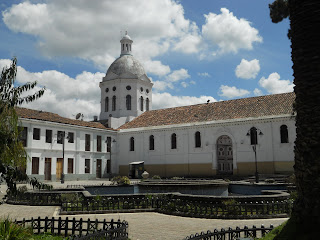
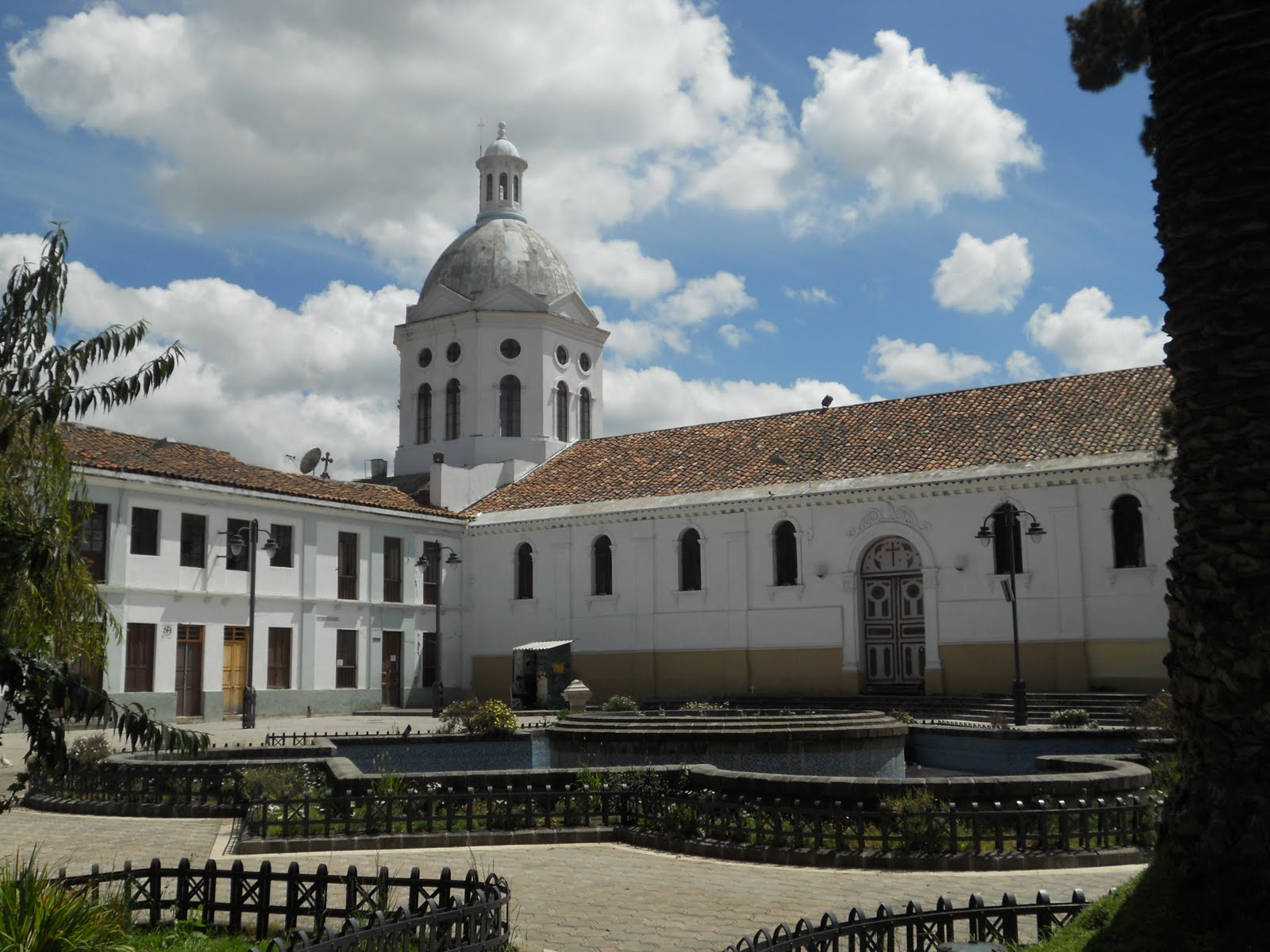
 - Cuenca. This is purported to be one of the prettiest towns in Ecuador and we really enjoyed it, from the laid-back and relatively tranquil atmosphere, to some great museums, beautiful plazas and colonial architecture, and a fun place to stay (Hostal El Barranco). Georgia used some of her dishwashing allowance money to buy a Panama hat (misnamed since these types of hats actually originated in Cuenca).
 - Galapagos. Tough to know where to start here but we have seen some amazing wildlife and sights. The highlight so far was probably snorkeling and swimming/playing with a young sea lion yesterday. We have also seen penguins, blue-footed boobies, sharks, manta rays, giant land tortoises, sea turtles and lots and lots of lizards. Activities here have included boat trips, hikes, bike riding, snorkeling, horseback riding and kayaking. This is our last day here and then it is on to Chile tomorrow.
That is all I have time for now and unfortunately my connection is too slow to upload any more photos.
Matt
- Los Organos. This is a fun little beach town in northern Peru, south of the much busier surf mecca of Mancora. We rented part of a house which fronted a beautiful beach. It was a great place to relax and do a bit of swimming and body-surfing, plus eat some great seafood.

That is all I have time for now and unfortunately my connection is too slow to upload any more photos.
Matt
Monday, July 25, 2011
Travel Update
It´s time for a little travel update from the Hasties. We´ve been traveling for about 12 days now. That means lots of miles; lots and lots of buses, combis and taxis; many sights; and even more photos. Here´s a quick summary of a few of the highlights:
- Arequipa. We stayed there for three nights. Highlights included the Santa Catalina monastery - a beautiful monastery in use since the 1500s; great food (particularly liked La Capitana where we got a smorgasbord of local dishes); lovely plazas; and some beautiful residential neighborhoods.
 - Colca Canyon. We did three days of hiking and spent two nights here in the second deepest canyon in the world (the deepest being the nearby Cotohuasi). Unlike places like the Grand Canyon or Zion Canyon in the US, there are several towns in this canyon, including places to stay, which means we could pack in a minimal amount of stuff - just snacks and clothes for three days. The place was beautiful and tranquil and the girls were awesome hikers. On the last day, we hiked out of canyon - a climb of over 3,000 feet which we finished by 8 a.m., including a moonlit start. In nearby Cabanaconde, as part of the local festival of the Virgen de Carmen we were also treated to one of the best fireworks displays we´ve ever seen.
 - Paracas Reserve and the Ballestas Islands. Both of these places feature outstanding marine life. The Ballestas in particular are home to thousands upon thousands of gulls, cormorants, penguins and other birds, as well and sea lions and other sea life. The sheer number of birds was astounding. The Paracas National Reserve is a seemingly barren but beautiful landscape that still contains an abundance of marine life.


- Arequipa. We stayed there for three nights. Highlights included the Santa Catalina monastery - a beautiful monastery in use since the 1500s; great food (particularly liked La Capitana where we got a smorgasbord of local dishes); lovely plazas; and some beautiful residential neighborhoods.
- Moche Pyramids and Chan Chan. Today we visited some fabulous ruins from the Moche period (the Huaca de Luna) and Chimu period (Huacas de Esmerelda and Arco Iris and Chan Chan). Below is a picture of carvings at the Huaca de la Luna. This square shaped pyramid has five levels. Every 70-100 years, the Mochicas built a new level over the top of and around the previous one, covering all the artwork, sculptures, tombs, etc. from the previous incarnation - fascinating. The associated museum was one of the best we´ve seen in Peru showcasing an impressive collection of fantastic pottery from teh site.
That´s enough for now. In the next few days we´ll see more of the northern coast of Peru, including stops in Lambayeque and Los Organos for more museums and hopefully a bit of relaxing on the beach. Then it´s on to Ecuador and the town of Cuenca followed by a trip to the Galapagos Islands. We´ll try to do another post somewhere in there.
Matt
Monday, July 11, 2011
The Long and the Short of It
Two days from now, our family will switch gears dramatically. Wednesday marks the end of our ‘stay in one place‘ phase, and we turn towards a very different way of life that will carry us all over Peru for five weeks of travel. This change, I predict, will bring with it a new perspective, different standards, and certainly a different flavor of adventure.
For the past four and a half months, I have been trying to blend into our small-town, Peruvian habitat as we have set up residence in Pisac. I don’t wear shorts or short skirts. I cover my skin. I don’t buy fancy food or clothes or tourist goods. I eat the daily specials at the local restaurants for $1.25 instead of made-to-order meals at the better restaurants for $8. I shower when I smell bad, not when my hair is out of place (that means about once a week). I don’t sit on terraces, drinking martinis and looking over the working populace of the town on market days. I don’t talk loud. I don’t wear jewelry or expensive-looking clothes. In fact, I wear the same, plain clothes most days – one of two pairs of pants and one of three or four blank shirts (no “I heart New York” tees!). I try to stick to a routine that resembles that of the people around me, except with moderation – they get up at 4 am to start setting up their stalls and merchandise; I get up at 6:30.
I don’t know if anyone even notices or cares about how I act or what I do, but it makes me feel like I am living in closer alignment with the people around me when I don’t draw too much attention (admittedly difficult at 5’ 10 ½” with two curly haired, rubian daughters...). My neighbors wear all sorts of crazy American tee shirts (one 15-year old girl wore a shirt that read “Pussy” – I know she wouldn’t have worn it if she knew what it meant!), and traditional skirts that show calves and ankles. But I try to fly under the radar with my neutral appearance. I just don’t want to be mistaken for a tourist.
My Spanish may be marginal, my job requires next to no manual labor, and I don’t have to count my pennies like they do, but people tend to treat me as an equal, saying ‘buenas dias’ and ‘buenas tardes’ politely. We are charged the same prices as our neighbors (most of the time). The vendors in the market don’t try to sell to us anymore. Pisacians seem to recognize us as, if not locals, then a different kind of gringo.
This Wednesday, however, we will heft onto our backs large, fancy traveling backpacks, and somewhat self-consciously parade ourselves down the main pedestrian path towards the bus stop. This typical tourist indicator - the backpack - may sound a warning bell among the vendors we see daily but who don’t know us by name. The image of four heavily laden Americans marching away from their town may very well demote us from our special status of ‘gringos who stay’ back to just another group out of the millions of ‘gringos who pass through.’ And rightly so. Because that is what we are doing. We are going away.
We will board a bus, embarking on what in the eyes of Pisacians is an extravagant five-week vacation. We will leave behind us the beginnings of membership in this community: knowing where to get the best hot bread first thing in the morning; walking just so, without breaking stride, to avoid dog poop in the street; greeting familiar, smiling faces as we cross the square. Step by step, as our neighbors watch our backpacks grow smaller and smaller, we will transform back into tourists, slipping silently away through the hubbub of the oceanic marketplace, leaving only a minute ripple in our wake. The ripple will soon be subsumed by the reverberations of ten or twenty other travelers – some who stay and some who don’t - and then it will disappear almost entirely.
Fitting in is a high priority for me in Pisac. But it won’t be as we pass through the twenty-odd cities we have mapped out for ourselves over the next month. We are going to do blatantly touristy activities, eat touristy food and pay touristy prices. Our ripples will be so small that they will be inconsequential. On one level this may seem sad – we will have less understanding, less participation. Relationships will be short and shallow; experiences likewise. But it also grants a kind of freedom – no more small-town responsibilities, no more soap operas or politics. No more trying to fit in. And the breadth of our experience will be dramatically increased. Peru isn’t Pisac. It is so much more. And soon, we will get a glimpse of that truth, day by day, city by city, stepping back and seeing a much bigger picture.
Our time in Pisac will be imprinted upon our brains like the deep, intense flavor of a rich wine, concentrated at the root of our tongues to be savored and remembered. This next phase of our adventure will swirl and spin through all of our senses, briefly touching a chord here, causing a shiver there, like a cold splash of water on a hot day. The long and the short, the deep and the shallow, the near and the far: we will discover Peru both ways.
Cathy
Cathy
Upcoming Travels
One phase of our journey is winding down and another is about to begin. Our stay in Pisac is almost at an end (though we will return for a few days in late August). Matt has finished his work for DESEA. Cathy taught her last English class last week and also wrapped up a stint of volunteering with a team of US doctors here. And Katie and Georgia had their last day of school at Kusi Kawsay on Friday. Life in Pisac has been both challenging and enriching for us all and leaving will be bittersweet.
This Wednesday we will begin the next part of our trip – about five and a half weeks of travel in South America, visiting other parts of Peru, as well as Ecuador and Chile. This will include stops in Arequipa, Colca Canyon, and multiple cities, archeological sites, museums (and beaches) on the coast of Peru. It also will include travels to Cuenca, Guayaquil and the Galapagos Islands in Ecuador, plus visits to Santiago and Easter Island in Chile. We will be traveling between July 13 and August 19 and will have only sporadic access to e-mail during this time. Our Peruvian cell phones will still work while in Peru (until about Aug 1) but we may or may not use them in Ecuador and Chile.
We will arrive back in Pisac on August 19 to say our farewells to all our friends here and spend a few last days in our temporary home at the Hospedaje Beho. On August 25, we head to Lima for a couple of days, before returning to the Portland on August 29/30. If anyone needs to reach us during that time, e-mail will probably be most effective although we can’t promise a speedy reply. As always, thank you to all our friends and family for your thoughts and support!
Matt
Subscribe to:
Posts (Atom)